Movement, Stress Management and The 21st Century: part 1
Exercise, Stress Management and the 21st Century
There are many facets of the study of stress management that many individuals do not automatically consider daily. As we advance in society and further our knowledge base in medicine and technology, we learn new ways to enhance our lives. The fitness industry must also grow and expand to incorporate new techniques into our training sessions to remain relevant in our ever-changing industry. This course will help you learn techniques from multiple disciplines to apply to your professional practice. A myriad of modalities can be used to support your clients, reduce stress, and stave off chronic disease while remaining in your scope of practice. It is time that we expand our knowledge in the stress management space to provide more options for stress management and exercise prescription. (Kade, 2023)
The National University of Health Sciences states that numerous medical professionals have been combining Eastern and Western medicine for many years now. Some leading medical centers spearheading this new frontier are the Mayo Clinic, the University of California San Francisco, and Duke University. They currently offer Complementary and Alternative Medicine (CAM) to their patients. As a Mind/Body Medicine Specialist™ adopting a more Integrative Fitness and wellness approach™ (coined by the stress management Institute) will enable you to relate more readily to the ever-changing landscape of the medical industry. As the field of stress management evolves, we as Mind/Body Fitness Practitioners™ need to adapt to serve our clients better. (Kade, 2022) This course will teach you how to use Eastern and Western evidence-based wellness modalities to form a deeper mind/body connection. One feature constantly overlooked when studying stress is "energy production" in the body. (Kade, 2023)
The Significance of "Healthy Energy" In Eastern and Western Medicine

According to Dalian Nationalities University in China, the body needs energy to function correctly and sustain life. There are two schools of thought about energy production in Eastern and Western medicine. Even though they are different, they run along a parallel and have similarities, such as a disruption in the energy flow contributing to disease. The process of generating qi and cellular respiration in the body begins with the air that we breathe and the nutrient-dense food we consume. Through research, it has been found that individuals who had a qi deficiency also had a decrease in cellular adenosine triphosphate (ATP). More research, however, is being conducted on the hypothesis that qi is related to ATP and energy synthesis. (Ko, 2018)
The hormone cortisol begins eroding the body on the cellular level within the mitochondria and moves on to other body systems as the damage progresses. As human beings, we need a constant supply of "healthy energy" to be able to go about our daily activities and function properly. You may be wondering what "healthy energy" is and how does it help or hinder our very existence. In Eastern and Western medicine, energy is a vital force, and we, as humans, simply cannot exist without its presence. In Eastern medicine, energy is referred to as qi. In Western medicine, it is called cellular respiration, which is a process where the body extracts its energy in the form of adenosine triphosphate or ATP to give us the ability to move, breathe, and carry out our daily activities. In Eastern and Western medicine, healthy energy is known as free-flowing energy and in abundance without interruption or blockage. According to Harvard University, chronic stress and the release of cortisol reduce ATP or energy production and give way to inflammation, which can cause heart disease, diabetes, cancer, arthritis, and bowel diseases. Being sedentary, lacking sleep, poor diet, and social isolation can add to this issue by causing the body to use ATP less efficiently. (Harvard Health Publishing, 2019)
In traditional Chinese medicine, a deficiency or blockage in qi can lead to chronic fatigue syndrome, diabetes, and many other conditions that we can identify within conventional medicine. An understanding of energy production, homeostasis, and usage is critical when working with individuals who have a chronic illness due to stress or individuals who are trying to prevent it. We will now explore energy in more depth to show you how it is made and ways of keeping it healthy. A significant part of keeping the body healthy in terms of stress management is the homeostasis of energy balance. According to the International Journal of Molecular Sciences, energy is the gateway for connecting Eastern and Western medicine. We initially started integrating traditional Chinese Medicine and Conventional Medicine. (Johnson et al., 2019))
Both forms of energy have specific pathways to travel throughout the body. Qi moves through meridians, and adenosine triphosphate (ATP) is generated through glycolysis, the Krebs cycle, and the electron transport chain. In both schools of thought, the balance of energy or homeostasis is vital. If there is a decrease in energy or a disruption in its flow, diseases can manifest. The homeostasis of energy is dependent on food intake, energy expenditure, and how much energy is used daily. Mutations in the cellular energy of ATP with insufficient amounts of energy have been shown to impact skeletal muscle, the brain, the liver, the heart, and the kidneys. In traditional Chinese medicine, a deficit in qi can result in chronic fatigue syndrome, diabetes, indigestion, menstrual cramps, and many other conditions. It will also affect the heart, lungs, and kidneys. (Evans, 2019)
Energy and Meridians of The Body
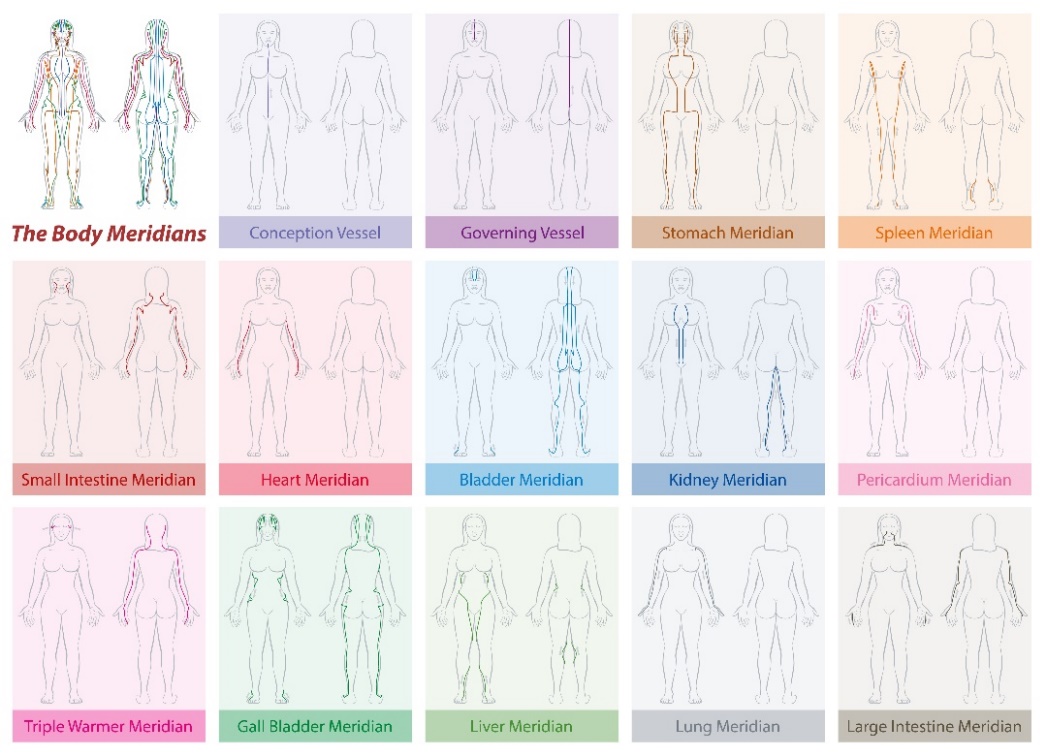
Traditional Chinese Medicine (TCM) has been practiced for around 2,500 years, which can be traced back to the Shang Dynasty in China from 1600 – to 1046 BC. (Felicity, 2019) Chinese medicine is similar to other cultures such as Greece (Unani Medicine) and India (Ayurvedic Medicine). There are certain aspects and theories from these cultures, such as meridian work that can be used during group or private training sessions that can be safely incorporated into mind/body wellness programs™ for our clients to try and relieve stress and help to promote homeostasis throughout the body. Meridians are pathways in the body that qi or vital energy uses to flow through the body. Twelve meridians correspond with the body's organs in Chinese Medicine, referred to as Zang-Fu organs. There are five Zang organs (yin): the heart, spleen, lung, kidney, and liver. Their primary function is to create and store qi or energy for the body. The fu organs (yang) are the stomach, small, large, urinary, and gall bladder. The function of fu organs is to maintain the health of the body by regulating temperature, protecting from pathogens, and converting breath and nutrition into qi. (Ko, 2018)
According to Hindawi, the Journal of Evidence-Based Complementary and Alternative Medicine, the body's meridians were discovered for the first time in 2018 by researchers from the University of Vienna/Division of Anatomy and Cell Biology. The image below demonstrates acupuncture points as well as meridian pathways. In this course, you will learn about the acupressure technique related to mind/body somatic movements in the fitness industry and the movement of energy. When working with clients who have severe chronic stress, it is essential to have an integrative viewpoint on energy and its creation and release into the body. (Maurer et al., 2019)
Meridian Pathways Of The Body
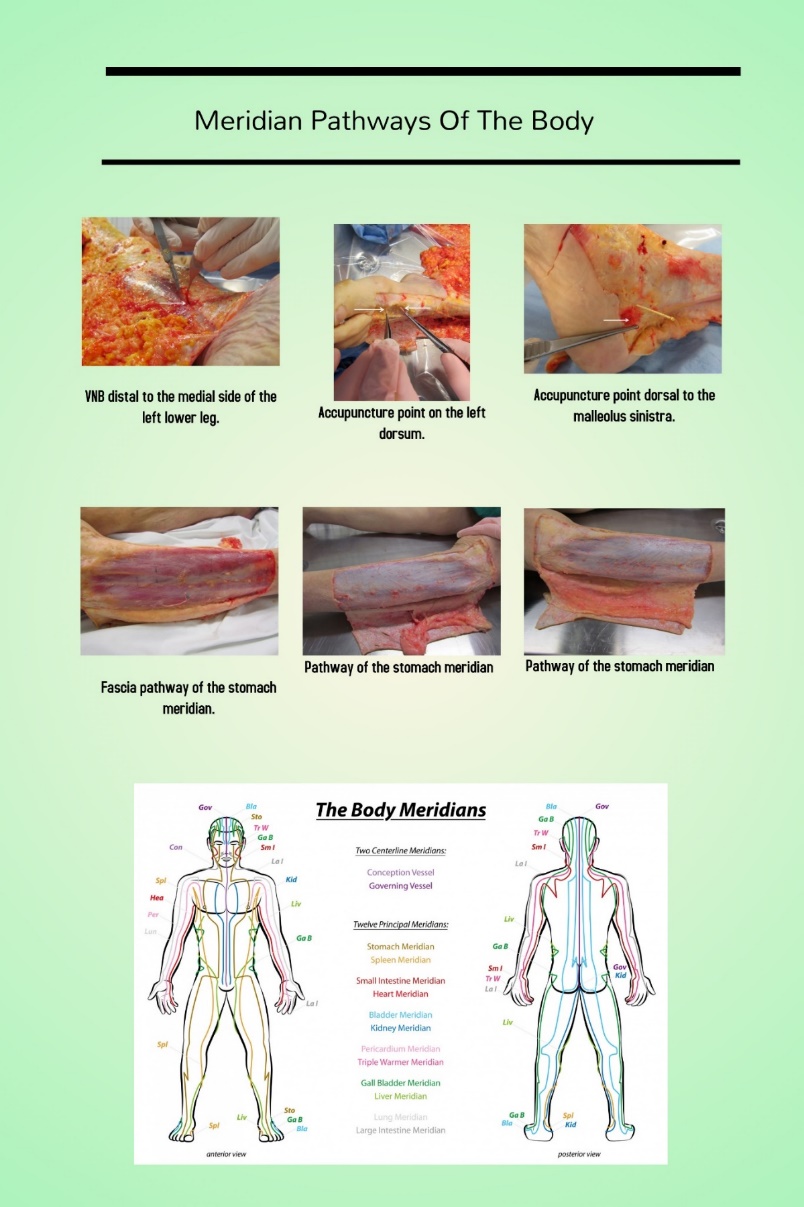
Adapted from: Maurer, Norbert, et al. "Anatomical Evidence of Acupuncture Meridians in the Human Extracellular Matrix: Results from a Macroscopic and Microscopic Interdisciplinary Multicentre Study on Human Corpses." Evidence-Based Complementary and Alternative Medicine, vol. 2019, 2019, pp. 1–8., doi:10.1155/2019/6976892.
The Yin-Yang Theory in Traditional Chinese Medicine
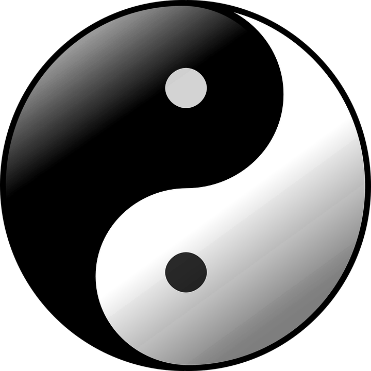
The Hong Kong University of Science and Technology states that the Yin-Yang Theory is the basic principle of Chinese Medicine that guides Eastern and some Western medical practitioners in conjunction with conventional medicine to prevent, diagnose, and treat a disease within the human body. The Yin and Yang must function together as you cannot have Yin without Yang or vice versa. There can, however, be an imbalance resulting in more of one or the other, which can lead to illness and, in extreme cases, death; an example of this for Mind/Body Medicine Specialist™ would be the Sympathetic (yang) and parasympathetic (yin) nervous system when it comes to the flight or fight response and chronic stress. If your client is always on heightened alert and the sympathetic nervous system (yang) is dominant, this can cause chronic diseases such as diabetes, cancer, and heart disease. The Yin Yang Theory can be applied to any concept with opposing forces where there can be an imbalance. (Ko, 2018)
As previously mentioned, yin and yang are opposing forces and can be observed in any instance where an imbalance may be prevalent. Let it be known that the Yin-Yang Theory relates not only to Chinese medicine. It can be observed all around us. An example of this would be temperature (hot and cold) day and night, sun and moon, and disease progression or regression. In essence, the yin-yang symbolizes homeostasis between two opposing forces, and our bodies continually try to stay balanced to avoid any adverse outcomes. (Ko, 2018)
The Creation and Physiology Of Qi
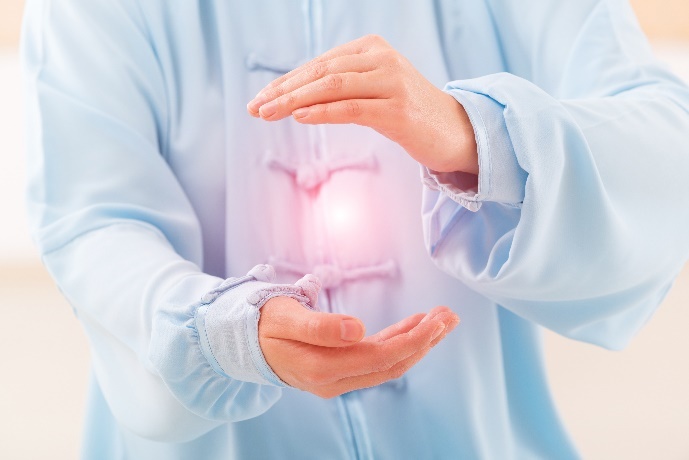
Qi is initially created in the prenatal stages of conception by our parents, called inborn or primordial qi, and gives babies the energy to grow in the womb. There are three other types of qi that the body uses to be balanced or in homeostasis, which are pectoral qi, nutritive qi, and protective qi. Each has its function and purpose in the body. Pectoral qi stored in the chest is formed by mixing the lungs' fresh air and the nutrients we obtain through nutrient-dense food. Pectoral qi is dispersed through the blood vessels of the heart and lungs and moves through the body as we exhale. Nutritive qi supplies nourishment to the body, including the organs through the blood vessels, and protective qi serves as a barrier between the human body and the environment. Its purpose is to help protect us from disease and illness by forming a protective barrier between the skin and muscles. It also moves around the abdominal and chest cavities. (Ko, 2018)
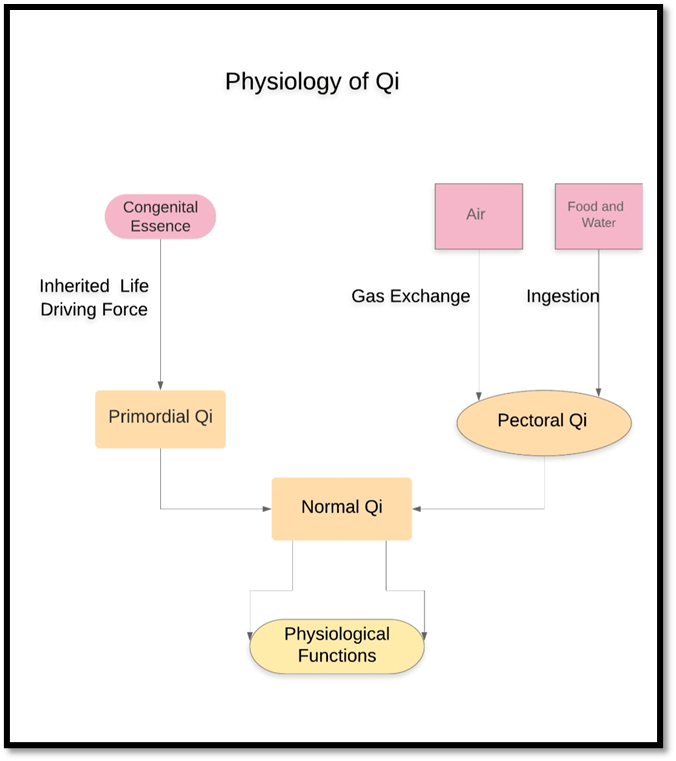
Adapted from; Leong, Pou Kuan, et al. "Yang/Qi Invigoration: An Herbal Therapy for Chronic Fatigue Syndrome with Yang Deficiency?" Evidence-Based Complementary and Alternative Medicine, vol. 2015, 2015, pp. 1–8., doi:10.1155/2015/945901.
When there is homeostasis in the body, healthy qi is created, which flows through the meridians in a cyclic, clockwise manner which starts in the lung meridian, and flows out of the large intestine meridian; it then proceeds to the stomach meridian and exits through the spleen meridian before traveling to the heart and exiting the small intestine meridian, it then moves into the bladder meridian and exits the kidney meridian. Qi then travels to the pericardium meridian and exits through the triple warmer meridian before moving to the gallbladder meridian and leaving the liver to head back to the lung meridian to start the cycle over. (Ko, 2018)
All of the mind/body exercises in this course will be performed in a clockwise manner to help promote the natural flow of qi throughout the body for homeostasis. There is also a Horary Clock or circadian rhythm clock in Chinese Medicine that demonstrates which time of day the qi in our body is more likely to flow through each primary organ and the associated meridian. According to Frontiers In Pharmacology, Adenosine Triphosphate (ATP) also follows the circadian rhythm, with the most ATP being produced between 12:00 am and 4:00 am. The lowest amount of energy is created at noon. There is a diagram of the clockwise flow of qi in the human body and the Horary Clock below. (Svobodova et al., 2018)
The clockwise flow of qi through the meridians of the body
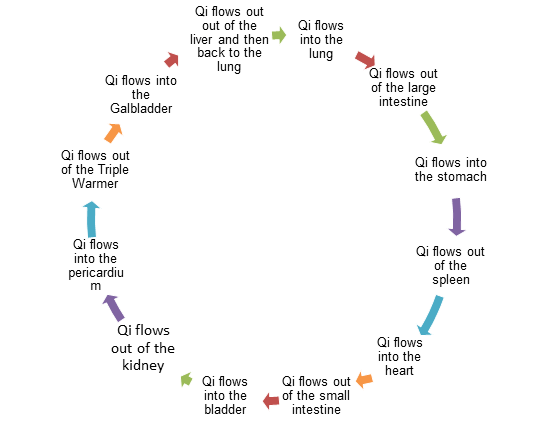
Adapted from: Marie, Tina. "Flow of Qi in Body." Tina Marie Company, 2020, Tinamarie.com/2017/12/body-always-communicating/flow-of-qi-in-body/.
Horary Circadian Rhythm Clock in Chinese Medicine
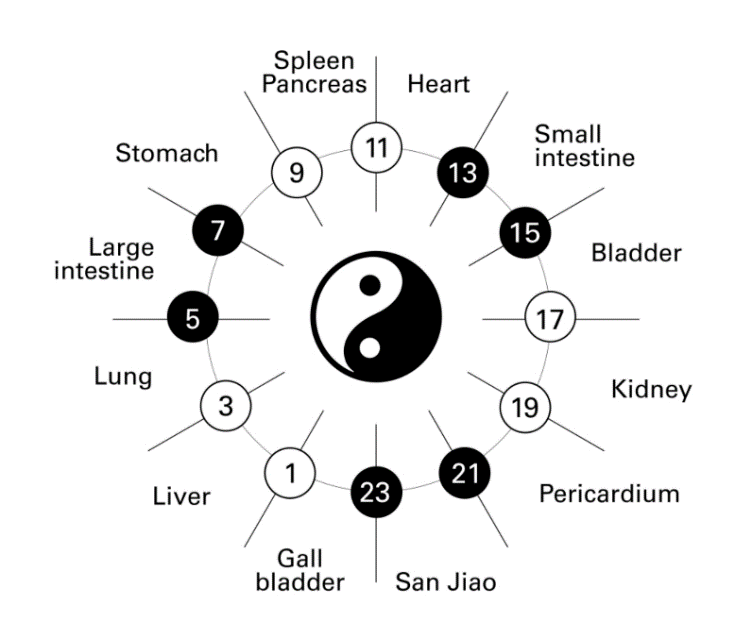
According to the Journal of Acupuncture and Meridian Studies, stress is one of the significant risk factors for a deficiency in qi. The most common qi deficiencies linked to people are heart qi deficiency, liver blood qi deficiency, and heart blood qi deficiency. Heart qi deficiency was recorded at 55% in men, 62% in women, liver blood qi deficiency in men was 51%, and 60% in women. Finally, heart blood qi deficiency was found in 53% of men and 60% of women. The symptoms of heart qi deficiency are sweating, heart palpitations, anxiety, nightmares, trouble sleeping, and mood swings (Wong, 2020)
Increasing The Flow Of Qi
When someone is deficient in qi, some things can be done to help restore energy to the body, e.g., rest is recommended. According to Medical News Today, Acquiring enough sleep each night is essential to energy production in the body. Taking breaks throughout the day, as well as daily naps can be very helpful. Participating in mind/body classes and eating certain foods can also help the body restore its energy. Chinese Medicine practitioners ask their patients to consume nutrient-dense foods, lentils, quinoa, oats, root vegetables, pumpkin, squash, and miso soup. They ask patients to avoid refined sugar, refined grains, fried or salty foods, dairy products, citrus, bananas, beer, and dough. Remember that it is out of your scope of practice to prescribe diets for your clients, but you may refer out to a registered Dietician or Chinese Medicine Practitioner. It would depend on where your client would like to go for dietary services. (Johnson, 2020)
When planning times for your somatic movement small group sessions or group fitness classes, the Horary Circadian Rhythm Clock can help you to know when the most qi will flow through the heart and liver and their associated meridians. For example, the Horary Clock shows us that qi is most likely flowing through the heart and its meridians between 11:00 am and 1:00 pm. Scheduling classes and group sessions during this time frame is encouraged, but if it does not work within your schedule, any time will do. Since we encourage homeostasis, you will be choosing somatic movement exercises for each meridian and instructing class participants in a clockwise manner during your classes. (Kade, 2023)
Western Medicine and The Production Of Adenosine Triphosphate (ATP)
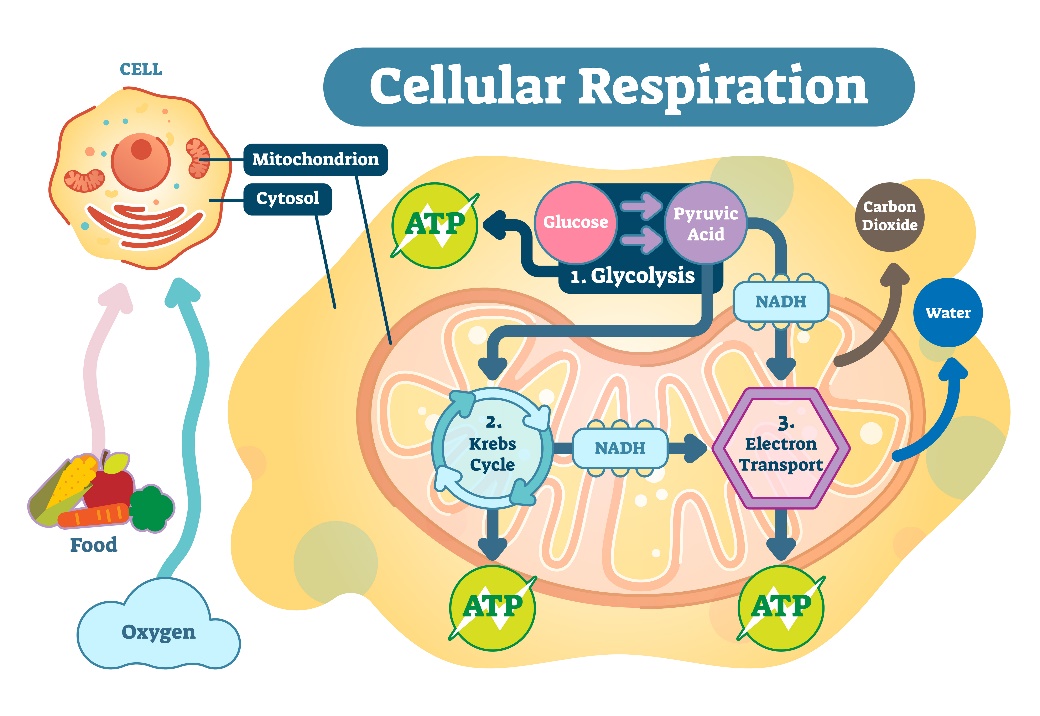
Cellular respiration is the process recognized in Western society that creates energy to sustain life within the mitochondria of our cells. We need a healthy flow of energy for the body to remain in homeostasis and free of chronic disease. According to Frontiers in Pharmacology, skeletal muscle, brain, liver, heart, and kidneys diseases arise from a shortage in cellular Adenosine triphosphate (ATP). It is known that Alzheimer's Disease, Parkinson's Disease, and heart disease are the direct by-product of a shortage in ATP. In 2018, the Mitochondrial Protein Index from Mito Minor stated that 1,600 coded genes of the human body are associated with mitochondria. The human body has about 20,000 genes, so approximately 8% of our genes are associated with mitochondria and their energy. Like qi, the synthesis of cellular respiration is produced clockwise and begins with the food that we consume and the air we breathe. (Johnson et al., 2019)
The Production of Cellular Respiration

Cellular respiration is a process where the mitochondria turn food into viable energy in the form of ATP. This technique involves breaking down glucose in the presence of oxygen into six carbon dioxide molecules. The energy released is conserved by turning adenosine triphosphate (ADP) and free phosphate into ATP. Numerous steps must occur to acquire the end goal of creating ATP. https://www.accessscience.com/content/cellular-respiration/118150 2019 (biology online, 2021)
The first phase of the process is the breakdown of glucose or food in the cell's cytoplasm in a process called glycolysis. Then pyruvate molecules are moved into the mitochondria to be broken down further. Mitochondria are organelles known as the "powerhouse" of the cell. The pyruvate has been converted to a 2 – carbon molecule that enters the Krebs cycle. All mitochondria have an inner membrane with folds, called the cristae, which increases the surface area where cellular respiration occurs. The final stage involves the energy entering the electron transport chain where it is used to produce ATP. Oxygen must be present when turning glucose into ATP, and in the first step, only two molecules for each glucose molecule are released. The by-products of ATP are carbon dioxide and water. Carbon dioxide moves out of the mitochondria into the bloodstream and then back to your lungs to be exhaled, and ATP is created during this time. (biology online, 2021)
A Closer Look At Cellular Respiration
Adapted from: Martínez-Ramírez, Imelda, et al. “Regulation of Cellular Metabolism by High-Risk Human Papillomaviruses.” International Journal of Molecular Sciences, vol. 19, no. 7, 2018, p. 1839., doi:10.3390/ijms19071839.
The Process of Glycolysis
Glycolysis is the lysing or splitting of glucose into 6 – carbon glucose and 3 – carbon pyruvate molecules. Glycolysis occurs in the cell's cytoplasm, which occurs in the presence or absence of oxygen. A minute amount of nicotinamide adenine dinucleotide (NAD) + hydrogen (H) (NADH) is made as well as a total of four ATP molecules, known as nucleotides. After the glycolic conversion, two ATP remains, and NADH temporarily holds onto the energy later in the process. https://www.accessscience.com/content/cellular-respiration/118150 2019 (biology online, 2021)
The Krebs Cycle
Under aerobic conditions, pyruvate enters the mitochondria to go into the Krebs cycle in the presence of oxygen. The second phase of cellular respiration converts energy from glucose into NADH and Flavin adenine dinucleotide (FADH2) to pyruvate. A tiny amount of ATP is made during this cyclic process, which occurs in a continuous cycle. To make the process work, the Krebs cycle uses a two-carbon molecule (acetyl-CoA), which is made from pyruvate and produces carbon dioxide. (biology online, 2021)
The Electronic Transport Chain
During the final phase of cellular respiration, NADH and FADH2 create ATP. This part of cellular respiration occurs in two phases. In the first phase, NADH and FADH2 enter the electron transport chain, and their energy is used to pump (H+) into the intermembrane, by active transport, into the membrane space of the mitochondria. By doing this, a proton gradient is formed across the inner membrane. The protons then move down the concentration gradient and back into the matrix by facilitated diffusion. ATP is made during this phase by adding inorganic phosphate to ADP. This is the phase where most ATP is produced for the body. When oxygen is present (aerobic), approximately 36 ATP molecules are created for energy use. In the absence of oxygen (anaerobic), only two ATP molecules are produced. (biology online, 2021)
Somatic Mind/Body Movements and Energy
The mind/body exercises that we already instruct daily help to move qi along the meridians, but most fitness professionals do not know this, nor do they know how to instruct the exercises in a way that may help the body to be more homeostatic when it comes to stress and the cortisol hormone in the body. (Kade, 2023)
Wellness Yin-Yang